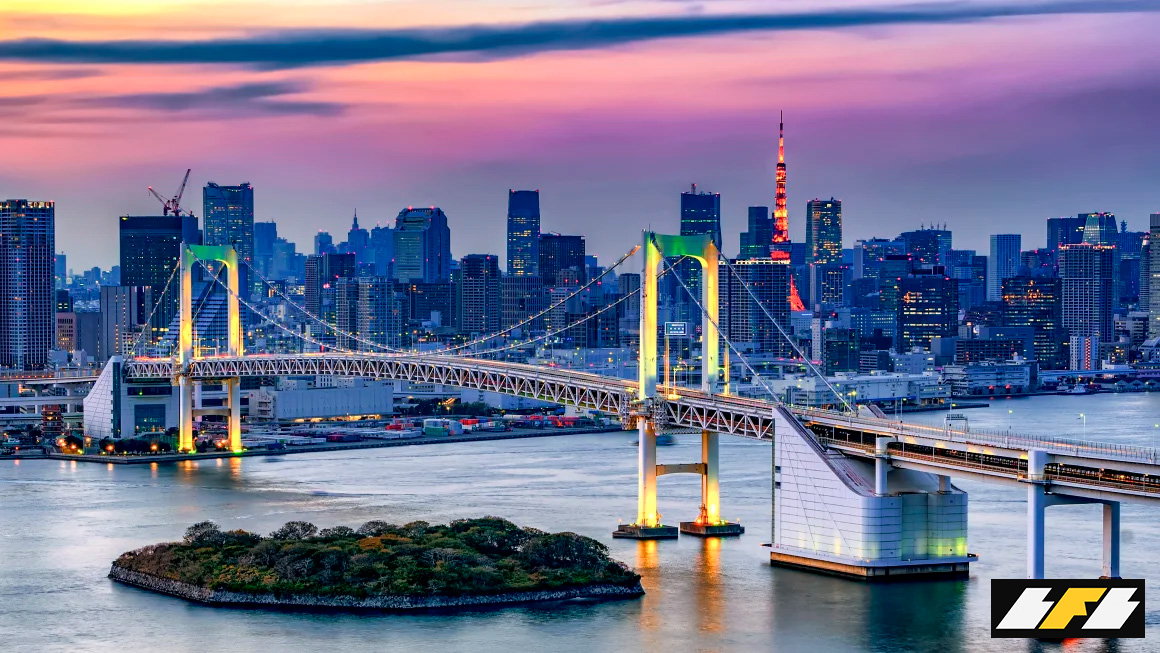
Tokyo may be a futuristic metropolis, but its roots run deep in the 17th century when the city was known as Edo—then one of the world’s largest urban centers, with a population of over 1 million, that flourished with commerce, entertainment, and culture. Street-side stalls serving nigiri sushi evolved into today’s counter-style dining, while former daimyo gardens and kabuki theaters took on a distinctly Edo identity that helped shape the city’s character.
Edo also faced major disasters, most notably the Great Fire of 1657 which destroyed more than half of the city. Out of these trials grew a spirit of resilience and ambition that lives on in modern initiatives such as the TOKYO Resilience Project, designed to strengthen the city’s preparedness against future natural disasters.
Centuries on, today’s Tokyo has some remnants from the imprint of Edo in the shape of its distinct neighborhoods, canals, and roads laid down by its former city planners.
Echoes of Edo
From districts organized by social roles to canals that shaped commerce, Edo’s urban planning continues to inform the capital’s modern landscape. When Tokugawa Ieyasu established Edo as the seat of his shogunate in 1603, the city was organized along social hierarchy and occupation. Samurai families and feudal lords were concentrated near Edo Castle—today’s Imperial Palace—land that later became home to public facilities such as government offices and universities. Surrounding these areas were the quarters for merchants and artisans. This zoning reflected the hierarchy of the Tokugawa era and laid the groundwork for modern Tokyo’s neighborhoods, many of which still recall their original roles.
Explore the interactive map of Tokyo to discover traces of Edo
Nihonbashi, a bustling commercial hub in the Edo period, remains an economic center, now home to the Tokyo Stock Exchange and the Bank of Japan. Ginza, no longer home to the shogunate’s silver mint, still shines as Tokyo’s district for luxury shopping, dining, and entertainment. Asakusa still carries its Edo legacy as an entertainment center once filled with kabuki theaters, geisha houses, and teahouses, while Ryogoku remains synonymous with spectacle—still the home of sumo tournaments.
Originally a residential quarter for lower-ranking samurai, Jimbocho gradually diversified as schools and temples took root, giving it an intellectual and spiritual character. Today, Jimbocho is celebrated as the world’s largest secondhand book district, its streets lined with hundreds of specialty bookstores, publishing houses, and cafes—a legacy that reflects its Edo-era origins.

A lasting urban blueprint
Catastrophic fires were a constant threat in Edo, where buildings were made of wood—and planners responded with built-in defenses. After the Great Fire of Meireki in 1657, Edo authorities instituted firebreak plazas and widened thoroughfares like Ueno Hirokōji to inhibit flames from spreading, and they protected temples with tall, tiled walls, which can still be seen at temples around Tokyo. At the same time, some neighborhoods embraced labyrinthine lanes—for instance, in districts like Kagurazaka—which would slow enemy intrusion. Those same meandering alleys now contribute to Tokyo’s historic charm.
Edo was built around the shogun’s castle with major roads radiating outward like spokes on a wheel. Nihonbashi, the official zero point from which the Gokaidō—the Five Routes—branched across Japan, became the principal business and transport hub of Edo, and later Tokyo. Some of those same thoroughfares shaped later transit lines like the Yamanote Line, which crossed the old ‘kaido’ roads converging on the castle and turned post stations such as Shinjuku, Shibuya, Shinagawa, and Ueno into the major hubs of Tokyo’s modern rail network.
One of the major features of Edo were its canals, which served as arteries for trade and logistics. Areas with good water access prospered, and marketplaces naturally developed along waterways such as Nihonbashi, which was once the site of a bustling fish market that later moved to Tsukiji, the latter giving the market the it is still known by today. Even in modern Tokyo, traces of those waterways and their influence remain, with reclaimed canal sections later transformed into roads, such as Sotobori-dori which follows the arc of Edo Castle’s outer moat.
The Tamagawa Aqueduct carried fresh water from the Tama River into Edo, enabling sento—communal bathhouses—to flourish. What began as a public health necessity evolved into a tradition of shared bathing and community bonding, a culture that endures with approximately 430 public baths still operating across Tokyo today.
Legacies of order
Public spaces like parks and temples dating back to the Edo period and earlier are central to the city’s social, cultural, and spiritual character. During the Edo period, temples—such as Tennoji—were relocated to Yanaka on the outskirts of the city to curb inner-city fires and keep them safely away from potential attacks, their inner city lots left empty to serve as fire breaks.
The shogunate played an active role in protecting the environment, introducing forestry ordinances, waterworks, and agricultural reforms that balanced growth with sustainability. Also around this time, wealthy daimyo began building elegant strolling gardens around their residences to display status and reflect Zen ideals of balance and contemplation. The vast estates played a role in shaping Tokyo’s urban form, with many of those sites later repurposed as public institutions and parks—including Koishikawa Korakuen Gardens, one of the oldest surviving daimyo gardens in Tokyo, and Rikugien, built in 1702 for the 5th Tokugawa shogun. These principles are echoed today in initiatives such as Tokyo Green Biz by the Tokyo Metropolitan Government, which promotes green infrastructure and envisions a sustainable city thriving in harmony with nature.
Tokyo’s neighborhoods like Nihonbashi, Ueno, and Ryogoku carry their Edo-era names and remain vibrant centers of commerce, culture, and entertainment—a living reminder that the spirit of Edo continues to flow through the capital, shaping its present and future.
For an in-depth look at this history, the Edo-Tokyo Museum—scheduled to reopen in spring 2026—offers large-scale models and reconstructions that showcase how the city was organized and transformed. Its annex, the Edo-Tokyo Open Air Architectural Museum in Koganei Park, known for inspiring scenes in the films of Studio Ghibli director Hayao Miyazaki, preserves historic buildings that allow visitors to step into Tokyo’s past, while ensuring the city’s heritage continues to inspire generations to come.


About the Author